Retinal conditions can present in very different ways. Some develop gradually, while others produce sudden visual changes that require prompt assessment.
The retina is the light-sensitive layer lining the back of the eye. It converts light into signals that travel through the optic nerve to the brain. Problems affecting the retina can therefore interfere with central vision, peripheral vision, visual detail, or multiple aspects of sight.
For people in Kharghar, knowing which symptoms deserve timely evaluation can prevent potentially important changes from being dismissed as tired eyes or a spectacle problem.
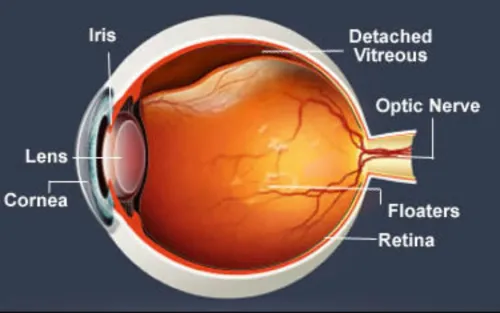
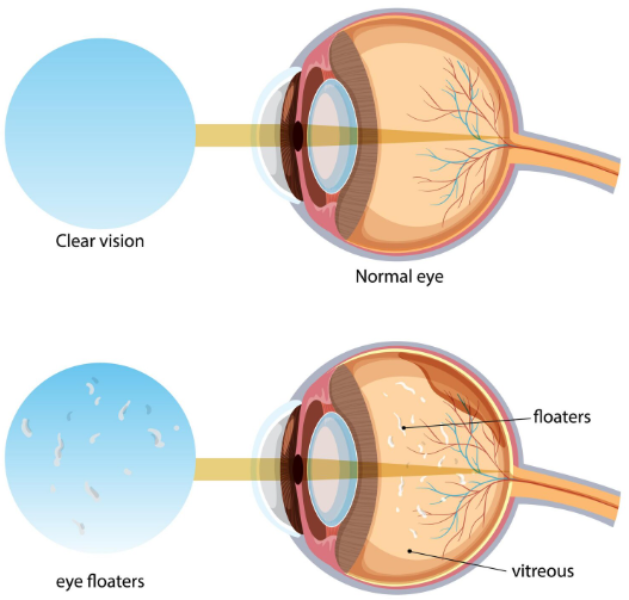
Sudden Flashes With New Floaters
A few stable floaters can be common, but a sudden appearance of many new floaters deserves more attention.
When this occurs with flashes of light, it can indicate that the vitreous gel is pulling on or separating from the retina.
A retinal examination is needed to determine whether a retinal tear has developed.
A Curtain-Like Shadow
A dark curtain, veil, or shadow moving across part of the field of vision is a particularly important warning sign.
This may occur with retinal detachment and should be evaluated promptly.
A person should not wait for the shadow to reach central vision before seeking care.
Distorted Central Vision
Straight lines appearing bent, warped, or wavy can indicate a problem involving the macula, the central area of the retina responsible for detailed sight.
Difficulty recognising faces, reading small print, or seeing fine detail may also accompany macular problems.
These symptoms warrant assessment even when peripheral vision remains relatively normal.
Sudden Blurring in Someone With Diabetes
Diabetes can affect retinal blood vessels and may lead to bleeding, swelling, or other retinal complications.
Sudden or progressive visual changes in a person with diabetes should therefore be assessed rather than assumed to be caused by changing blood sugar alone.
A dilated retinal examination can provide information that an ordinary spectacle-power check cannot.
Missing Areas of Vision
Retinal problems do not always cause uniform blur.
A person may notice a patch, dark area, or missing portion of the visual field. Such symptoms can have several possible causes, including retinal or neurological conditions.
The pattern, timing, and associated symptoms help guide the examination.
Why a Spectacle Test Is Not Enough
A refraction test determines whether lenses can improve focus. It does not provide a complete assessment of retinal health.
If a person reports flashes, sudden floaters, distortion, shadows, or unexplained visual loss, examining the back of the eye becomes particularly important.
Depending on the findings, the ophthalmologist may recommend retinal imaging or other investigations.
What Information Should You Give the Eye Doctor?
Be prepared to describe:
- Whether the change began suddenly or gradually
- Which eye seems affected
- Whether flashes are present
- Whether floaters suddenly increased
- Whether a shadow is moving across vision
- Whether straight lines look distorted
- Whether there has been recent eye trauma
- Whether diabetes or another relevant medical condition is present
Precise symptom descriptions can help direct the examination.
Retinal symptoms should be judged by their pattern rather than simply by how painful they are. Several important retinal conditions can occur without pain. Sudden visual changes, particularly a curtain-like shadow, new flashes, many new floaters, or abrupt vision loss, deserve prompt ophthalmic evaluation.
Keywords