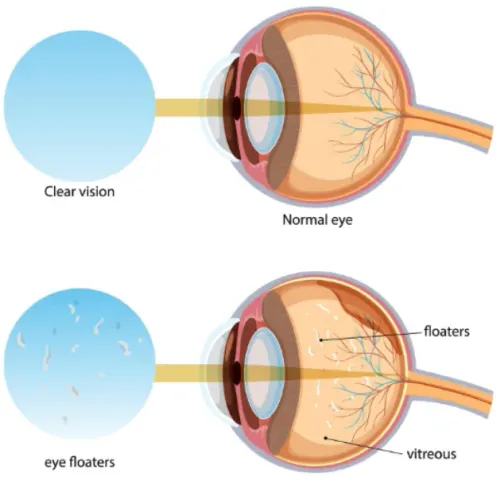
Small spots drifting across vision are common, particularly with increasing age. They may look like dots, threads, cobwebs, rings, or translucent shapes that move when the eyes move. These are commonly called floaters.
Flashes are different. They can appear as brief streaks, sparks, or flickers of light, often toward the side of vision.
Although many flashes and floaters are associated with changes in the vitreous gel inside the eye, certain patterns require prompt retinal assessment.
For residents of Taloja, understanding the warning signs can help distinguish a routine appointment from a situation that deserves faster evaluation.
Where Do Floaters Come From?
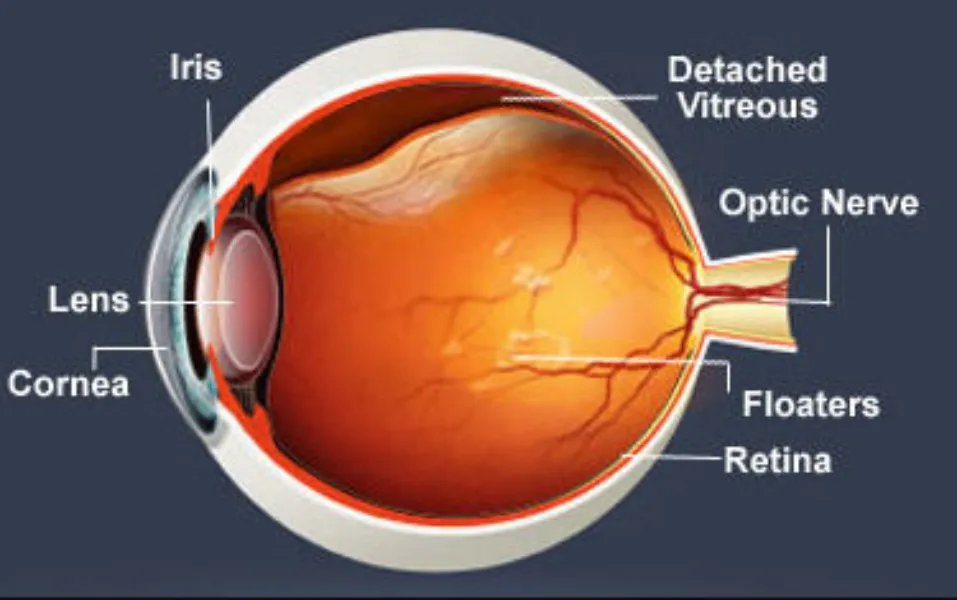
The inside of the eye contains a clear gel called the vitreous.
As people age, the vitreous can become more liquefied and develop condensations. These structures cast shadows on the retina, which are perceived as floaters.
They may be especially noticeable while looking at a bright wall, clear sky, computer screen, or other plain background.
Why Can Flashes Occur?
When the vitreous moves or pulls on the retina, mechanical stimulation can be perceived as light even though no external light caused it.
This can produce brief flashes.
A common age-related event called posterior vitreous detachment occurs when the vitreous separates from the retina. Many cases do not cause serious complications, but retinal tears can sometimes occur during this process.
Which Changes Are More Concerning?
Seek prompt ophthalmic assessment for symptoms such as:
- A sudden increase in the number of floaters
- New flashes of light
- Numerous new spots appearing suddenly
- A curtain, veil, or shadow across part of the visual field
- Sudden loss of peripheral vision
- New symptoms following eye trauma
- Noticeable sudden reduction in vision
These features can be associated with a retinal tear or retinal detachment, although an examination is needed to determine the cause.
What Does the Eye Doctor Need to Check?
A dilated retinal examination allows the ophthalmologist to examine the peripheral retina more thoroughly.
The goal is to determine whether the symptoms are related to uncomplicated vitreous changes or whether a retinal break, bleeding, inflammation, or another condition is present.
Depending on what is found, additional retinal imaging or treatment may be recommended.
Can Long-Standing Floaters Be Harmless?
Some people have stable floaters for months or years without significant changes.
Long-standing, unchanged floaters are different from a sudden shower of new floaters, particularly when flashes or visual-field changes occur at the same time.
Even so, new or unexplained symptoms are best assessed clinically rather than self-diagnosed.
Why Timing Matters
A retinal tear does not necessarily cause major central vision loss immediately.
If fluid passes through a retinal tear, the retina may begin separating from the underlying tissue. The extent and location of a detachment influence symptoms and management.
This is why a sudden change in flashes or floaters should not simply be watched at home for several weeks.
Knowing the warning signs makes it easier to respond appropriately. Stable symptoms can be discussed during routine eye care, while sudden flashes, many new floaters, a curtain-like shadow, or abrupt visual loss warrant prompt ophthalmic attention.
Keywords