A cloudy lens matters when it makes ordinary tasks harder: reading a medicine label, recognising a familiar face, judging an uneven road, or seeing through glare at night. By the end, you will know which changes point to cataract-related vision loss, what a proper evaluation checks, and how doctors decide whether glasses, practical adjustments, or surgery is the better next step.
Key takeaways
- Treated cataracts can improve reading, phone use, face recognition and colour matching.
- Glare, halos and changing spectacle prescriptions can point to cataracts.
- A cataract evaluation checks vision, eye health, the lens and surgical suitability.
- Seek urgent care for sudden blur, severe eye pain, flashes or a curtain-like shadow.
Which daily tasks can improve when cataract vision is treated?
The clearest gains appear in tasks that cataract blur has made slow, uncertain, or dependent on someone else. You may read small medicine labels, bills, or religious texts more easily; use your phone; recognise faces; watch television; cook with greater confidence; and match clothing colours without asking family members.
Better contrast can make uneven pavements, steps, kerbs, and public-transport platforms easier to judge. Reduced glare can make headlights and streetlights less distracting, while improved low-light vision can help you move around the home or outside after dusk.
| Viewing need | What may improve | What may still be needed |
|---|---|---|
| Distance vision | Road signs, faces across a room, television, and platform markings | Glasses for near work if the lens is monofocal |
| Near vision | Medicine labels, phone text, bills, cooking instructions, and religious texts | Reading glasses if the intraocular lens targets distance |
| Contrast and glare | Steps, kerbs, uneven ground, headlights, and streetlights | Caution in dim settings if retinal or optic-nerve disease remains |
A patient may see road signs clearly after treatment yet still need reading glasses. The result depends on the intraocular lens selected and whether it targets distance, intermediate, or near vision.
Driving requires realism: clearer vision does not automatically make night driving safe. Meet licensing requirements, test your vision after recovery, and follow the surgeon’s advice. Public transport can become easier to navigate, but use handrails and allow time while vision stabilises.
The practical cataract treatment benefits in Kharghar matter most when they restore activities you stopped, slowed, or delegated to family.
How do you tell cataract blur from another eye problem?
Changing spectacles helps refractive error, but it will not clear a cloudy natural lens. Cataract blur often comes with haze, faded colours, halos, glare, and reduced contrast. Brighter bulbs or a magnifier can restore function for a while, but they do not remove the cataract.
| Problem | Typical clue | What it means |
|---|---|---|
| Cataract | Haze, glare, halos, faded colours, poor contrast | Glasses may help briefly; assess the cloudy lens |
| Refractive error | Blur improves substantially with a new prescription | Updated spectacles may be enough |
| Dry eye | Vision fluctuates; stinging, burning, or gritty discomfort | Treat the ocular surface before judging cataract vision |
| Glaucoma | Peripheral vision gradually narrows | Eye-pressure and optic-nerve assessment are essential |
| Diabetic eye disease | Blurred or distorted vision from retinal damage | Diabetes control and retinal treatment affect the outcome |
| Macular or other retinal disease | Distorted or reduced central vision | Cataract surgery cannot repair damaged retina |
| Corneal or optic-nerve disease | Irregular blur, reduced clarity, or colour loss | The cause needs a targeted examination |
Book a cataract evaluation in Navi Mumbai if stronger glasses no longer restore useful vision, glare prevents night travel, faces remain difficult to recognise, reading needs unusually bright light or a magnifier, phone use becomes unreliable, or poor vision contributes to trips and falls.
A cataract can coexist with another condition. Surgery cannot promise full recovery unless the cataract is the main problem limiting sight. A dilated examination helps identify that limit before you choose between more lighting, magnification, new glasses, and surgery.
What happens during a cataract evaluation near Kharghar?
A cataract evaluation in Navi Mumbai checks more than the letter chart. The examination establishes whether the cloudy lens explains your difficulty and whether another eye condition could limit improvement.
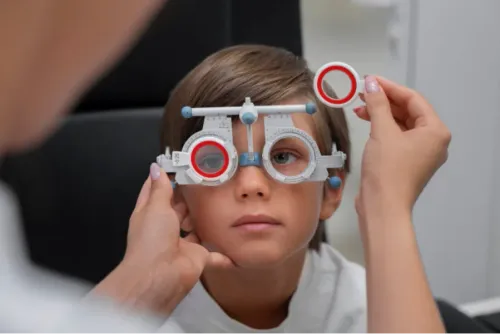
- Visual-acuity testing measures distance and near vision. Refraction then checks whether a new spectacle prescription improves the measured result.
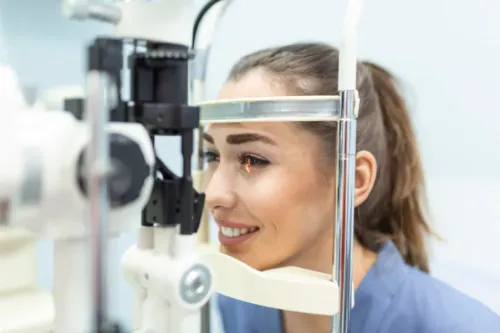
- A slit-lamp examination lets the doctor inspect the cornea, natural lens, iris, and other structures at the front of the eye.
- Eye-pressure measurement helps assess glaucoma risk. Dilating the pupils allows examination of the retina, macula, and optic nerve.
- If surgery is being considered, biometry measures the eye and calculates the intraocular-lens power. Corneal measurements or retinal imaging may be added when your history or examination indicates a need.
Bring your current glasses and a medication list to an appointment for cataract care near Kharghar. Tell the doctor about diabetes, blood-pressure treatment, blood thinners, glaucoma, retinal disease, previous eye surgery, and past eye trauma; these details can change testing, surgical planning, or expected results.
Describe what vision prevents you from doing rather than saying only “not good.” Report difficulty with night driving, glare, reading, work, hobbies, phone use, falls, and how often you rely on another person. These details help the cataract doctor judge whether treatment could restore useful independence.
When is cataract surgery worth considering?
A cataract doctor in Kharghar does not recommend surgery because a chart reaches one fixed score. The decision depends on how much vision limits reading, phone use, recognising faces, driving, work, or safe movement; what the examination shows; how much improvement the cataract is likely to provide; other eye disease; and the risks of proceeding.
| Option | What it helps | When it fits |
|---|---|---|
| Updated glasses | Focuses light more accurately | Blur improves substantially after refraction |
| Brighter lighting or magnifiers | Supports reading and close tasks | Symptoms are mild and independence remains intact |
| Cataract surgery | Removes the cloudy natural lens | Cataract-related limitations persist despite aids |
Glasses, better lighting, and magnifiers can extend independence when symptoms are mild. They do not remove the cloudy lens, so surgery becomes worth considering when the expected improvement outweighs the risks and daily activities remain restricted.
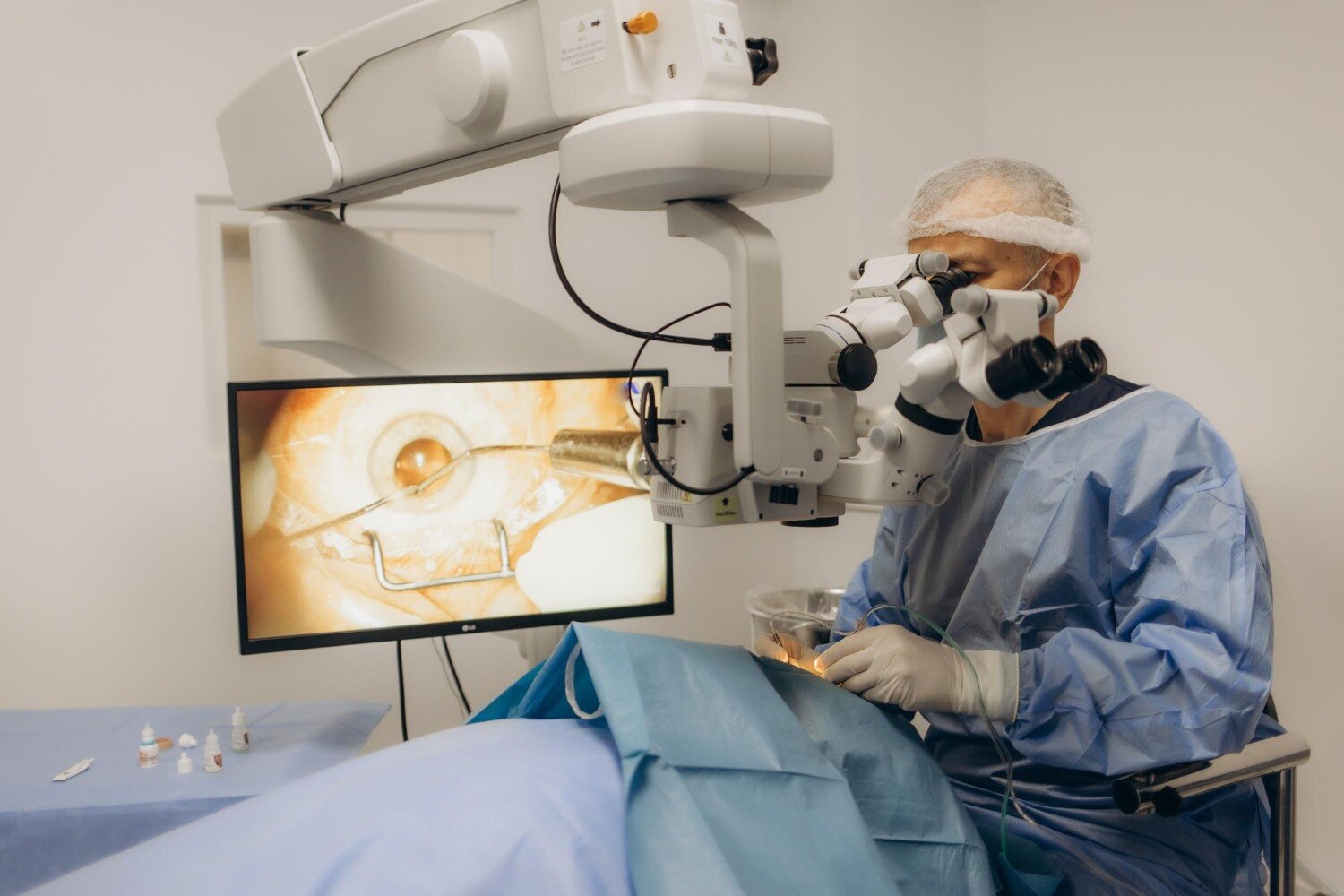
During modern surgery, the surgeon removes the natural lens through a small incision, commonly using phacoemulsification, and places an artificial intraocular lens that stays inside the eye. A monofocal lens targets one main distance, so you will often still need glasses for near work.
Multifocal and extended-depth-of-focus lenses can reduce spectacle dependence for selected patients, but halos, glare, and reduced contrast are important trade-offs. Agree on a distance, intermediate, or near target before choosing.
At Drashti Eye Hospital, patients seeking cataract care near Kharghar can discuss these measurements, alternatives, other eye disease, and realistic outcomes with an eye-care team rather than choosing solely on a glasses-free promise.
Related services
Cataract Cataract Services Comprehensive Cataract Care by Dr. Chintan Patel Cataract is a common age-related eye condition in which the natural lens of the eye becomes... |
Cataract Surgery Services Comprehensive Cataract Care by Dr. Chintan Patel A cataract occurs when the natural lens of the eye becomes cloudy, causing blurred or hazy... View service → |
What should you expect after treatment, and when is blurred vision urgent?
Cataract surgery is commonly a day-case procedure using topical or local anaesthesia, so an overnight stay is often unnecessary. Arrange for someone to accompany you home. During the first days, scratchiness, light sensitivity, mild redness, fluctuating vision, and temporary blur can occur as the eye heals.
- Use prescribed eye drops exactly as directed, and follow the surgeon’s instructions about driving, lifting, exercise, bathing, and returning to work. Resume reading, phone use, cooking, walking, and other activities as your vision and medical advice allow; do not assume clearer vision means perfect vision.
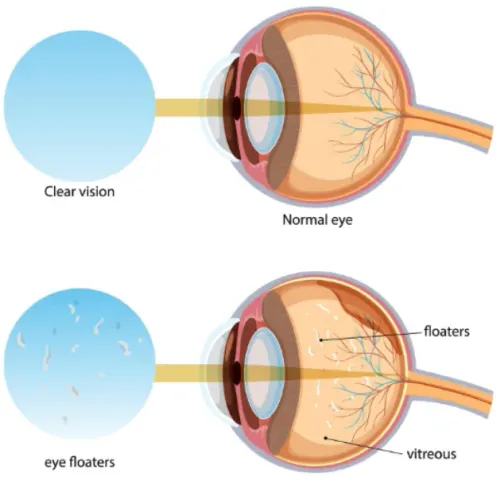
- Contact the eye-care team urgently for increasing pain, marked redness, worsening vision, flashes, a sudden shower of floaters, or a curtain-like shadow. These symptoms can signal infection inside the eye, retinal detachment, bleeding, raised eye pressure, severe inflammation, or a lens-related problem.
- If vision becomes hazy again weeks, months, or years later, posterior capsule opacification may be responsible. The capsule behind the intraocular lens has clouded; a YAG laser procedure usually clears it without repeating cataract extraction.
For people comparing cataract treatment benefits in Kharghar, the realistic gains include improved clarity, colour perception, contrast, and reduced glare. The result still depends on the retina, optic nerve, cornea, ocular surface, and the accuracy of pre-operative measurements. Another condition, such as diabetic retinal disease or glaucoma, can limit improvement, and glasses may remain necessary.
Frequently asked questions
Which daily tasks can improve after cataract treatment?
Reading medicine labels, bills and religious texts can become easier. Phone use, face recognition, television viewing, cooking and colour matching may also improve when cataract blur is the cause.
How can you tell cataract blur from another eye problem?
Cataracts often cause gradually worsening hazy vision, glare, halos around lights, faded colours and frequent prescription changes. Sudden vision loss, severe pain, flashes or a curtain-like shadow needs urgent assessment because it can indicate another eye problem.
What happens during a cataract evaluation near Kharghar?
An eye doctor measures your vision, examines the front and back of the eye, checks the lens for cataract changes and assesses whether another condition contributes to the blur. The evaluation also helps determine whether surgery is suitable.
When is cataract surgery worth considering?
Consider surgery when cataract symptoms interfere with reading, driving, work, household tasks or independence, and the expected improvement outweighs the procedure's recovery demands. Your eye examination and daily difficulties guide the decision.
When is blurred vision after cataract treatment urgent?
Contact your eye-care team urgently for sudden worsening vision, severe pain, marked redness, new flashes, many floaters, a curtain-like shadow or rapidly increasing swelling. These symptoms need prompt examination.
Keywords