A child may appear to see normally even when one eye is providing significantly poorer vision than the other. Because the stronger eye can compensate, parents may not notice a problem during everyday activities.
Amblyopia, often called lazy eye, occurs when visual development in one or sometimes both eyes is reduced because the brain has not developed normal visual processing from the affected eye during childhood.
For families in Taloja, recognising the importance of childhood eye examinations can help identify reduced vision before it becomes harder to treat.
What Can Cause Amblyopia?
Amblyopia can develop for several reasons.
One common cause is a substantial difference in spectacle power between the two eyes. The brain may rely more heavily on the clearer image and suppress input from the eye with poorer focus.
Other possible causes include strabismus, where the eyes are not consistently aligned, or an obstruction that interferes with clear visual input during early development.
Why Parents May Miss It
Amblyopia is not always obvious from appearance.
A child with one stronger eye may navigate the classroom, play, watch television, and recognise people without showing clear signs of difficulty.
Possible clues can include:
- Squinting
- Closing one eye
- Abnormal eye alignment
- Difficulty with some visually demanding activities
- Sitting unusually close to objects
- Poor performance on a vision screening test
However, some children have no noticeable symptoms.
Why an Eye Examination Matters
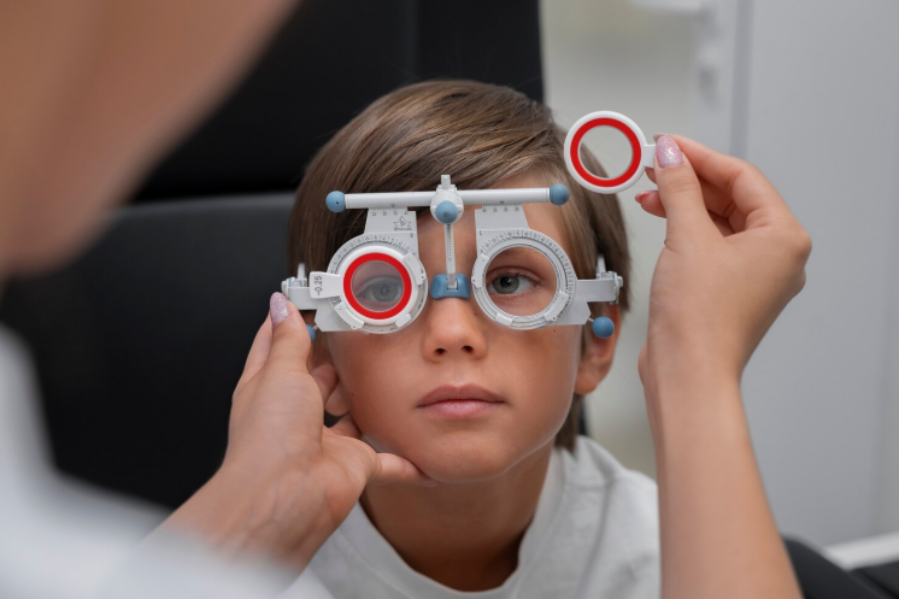
Testing each eye separately is essential.
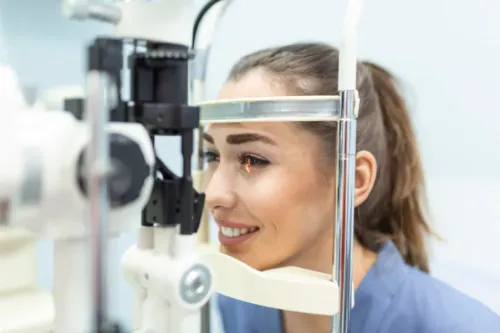
An ophthalmic examination can assess visual acuity, refractive error, eye alignment, and ocular health.
If reduced vision is found, the doctor needs to identify why the affected eye is not developing or functioning normally.
Simply calling the condition “lazy eye” without determining its cause is not enough.
What Can Treatment Involve?
Treatment depends on the underlying reason, the child's age, the degree of visual reduction, and other clinical findings.
Correcting refractive error with appropriate glasses may be an important first step.
Some children may require treatment designed to encourage use of the weaker eye, such as patching or other methods prescribed by the eye specialist.
If strabismus or another ocular condition is present, that problem may also require specific management.
Why Timing Is Important
The visual system develops during childhood.
Amblyopia treatment generally takes advantage of this period of visual development, which is why earlier identification is valuable.
Parents should not postpone an assessment on the assumption that a child will simply “grow out of” unequal vision.
Treatment Requires Follow-Up
Improvement does not necessarily happen immediately.
Children undergoing amblyopia treatment require follow-up to assess visual progress, spectacle use, treatment adherence, and whether the plan needs adjustment.
Parents should follow the prescribed schedule rather than increasing or decreasing patching time independently.
When Should a Child Be Assessed?
Arrange an eye examination if there is an obvious eye turn, persistent squinting, an abnormal screening result, concern about visual behaviour, a significant difference between the eyes, or a family history of relevant childhood eye problems.
Children may not realise that their vision is abnormal because they have no previous experience of clearer sight.
Amblyopia is therefore a condition where proactive detection matters. Checking each eye independently can reveal a problem that ordinary day-to-day observation may miss.
Keywords