
Headaches are extremely common and can arise from many different causes. Because prolonged reading, computer work, driving, or concentrating can sometimes trigger discomfort around the eyes, people frequently wonder whether their headache is being caused by an eye problem.
Sometimes vision-related factors contribute. In other situations, the headache may have little to do with the eyes.
For people in Kamothe, an eye examination can be useful when headaches repeatedly occur with visual tasks or are accompanied by changes in vision.
When Can Vision Contribute to Headaches?
Uncorrected refractive errors can make visual tasks more demanding for some people.
A person may notice discomfort after prolonged reading, screen use, detailed work, or other sustained focusing activities.
Symptoms can include frontal headache, tired eyes, intermittent blur, difficulty maintaining focus, or a feeling of strain.
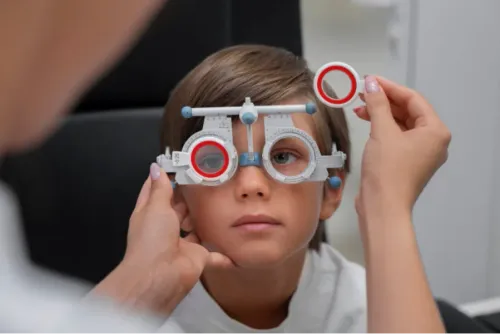
An updated refraction can determine whether spectacle correction is required.
Digital Eye Strain Can Add to the Problem
Long periods of computer use can combine several headache triggers.
Poor workstation posture, glare, prolonged near focusing, reduced blinking, dry eye, insufficient breaks, and inappropriate viewing distance may all contribute to discomfort.
Correcting only one factor may therefore provide incomplete relief.
When Is an Eye Examination Useful?
Consider an ophthalmic assessment when headaches are associated with:
- Blurred vision
- Difficulty focusing
- Eye strain during reading
- Repeated squinting
- Double vision
- Eye discomfort
- Frequent changes in visual clarity
- Problems with existing spectacles
- Significant screen-related symptoms
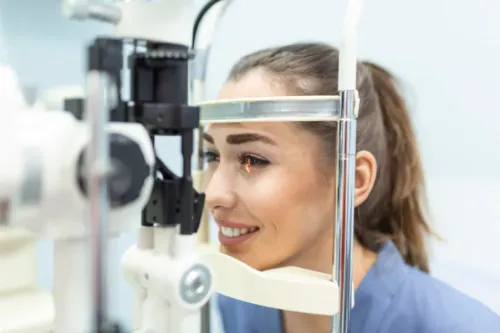
The examination can assess refractive error and look for relevant ocular findings.
Eye Pressure Should Not Be Self-Diagnosed
Some patients assume that every headache around the eyes indicates high eye pressure.
Most glaucoma does not present as a routine headache. Conversely, certain acute eye-pressure emergencies can cause severe eye pain, redness, blurred vision, halos, nausea, or vomiting and require urgent treatment.
Measuring eye pressure and examining the eyes is more reliable than trying to identify glaucoma from headache location.
When Headache Needs Broader Medical Attention
Not every headache should be managed through an eye clinic alone.
Seek appropriate urgent medical care for a sudden extremely severe headache, headache following significant injury, or headache accompanied by symptoms such as weakness, numbness, confusion, fainting, difficulty speaking, persistent vomiting, or other concerning neurological changes.
New visual loss or significant eye pain also requires prompt assessment.
Prepare Useful Information Before the Visit
Keep track of when the headaches occur.
Useful details include:
- Time of day symptoms usually begin
- Duration of each episode
- Relationship to reading or screen use
- Presence of blurred or double vision
- Whether spectacles improve symptoms
- Associated nausea or light sensitivity
- Any recent change in headache pattern
This information can help determine whether the symptoms appear visually triggered or whether broader medical assessment may be needed.
Choosing the Next Step
At Drashti Eye Hospital, an ophthalmic evaluation can help determine whether refractive error, ocular-surface discomfort, binocular-vision issues, or another eye-related factor may be contributing to visual strain.
If the eye examination does not explain recurrent headaches, the patient may need evaluation by the appropriate medical specialist.
The goal should not be to label every headache as an eye problem. It is to identify whether visual factors are contributing, address them when present, and recognise when symptoms require investigation beyond the eyes.
Keywords